วันเสาร์ที่ 15 ธันวาคม พ.ศ. 2550

Christmas


Christmas is an annual holiday that celebrates the birth of Jesus. The date of the celebration is traditional, and is not considered to be his actual date of birth. Christmas festivities often combine the commemoration of Jesus' birth with various secular customs, many of which have been influenced by earlier winter festivals.
In most places around the world, Christmas Day is celebrated on
December 25. Christmas Eve is the preceding day, December 24. In the United Kingdom and many countries of the Commonwealth, Boxing Day is the following day, December 26. In Catholic countries, Saint Stephen's Day or the Feast of St. Stephen is December 26. The Armenian Apostolic Church observes Christmas on January 6. Eastern Orthodox Churches that still use the Julian Calendar celebrate Christmas on the Julian version of 25 December, which is January 7 on the more widely used Gregorian calendar, because the two calendars are now 13 days apart.
The word "Christmas" originated as a contraction of "
Christ's mass." It is derived from the Middle English Christemasse and Old English Cristes mæsse, a phrase first recorded in 1038.[1] In early Greek versions of the New Testament, the letter Χ (chi), is the first letter of Christ. Since the mid-sixteenth century Χ, or the similar Roman letter X, was used as an abbreviation for Christ.[2] Hence, "Xmas" is often used as an abbreviation for Christmas.
After the conversion of
Anglo-Saxon Britain in the very early 7th century, Christmas was referred to as geol,[1] the name of the pre-Christian solstice festival from which the current English word 'Yule' is derived.[3]
The prominence of Christmas Day increased gradually after Charlemagne was crowned on Christmas Day in 800. Around the 12th century, the remnants of the former Saturnalian traditions of the Romans were transferred to the Twelve Days of Christmas (26 December – 6 January). Christmas during the Middle Ages was a public festival, incorporating ivy, holly, and other evergreens, as well as gift-giving.
Modern traditions have come to include the display of
Nativity scenes, Holly and Christmas trees, the exchange of gifts and cards, and the arrival of Father Christmas or Santa Claus on Christmas Eve or Christmas morning. Popular Christmas themes include the promotion of goodwill and peace.

วันพุธที่ 5 ธันวาคม พ.ศ. 2550

Neige


La neige est une forme de précipitation, constituée de glace cristallisée et agglomérée en flocons pouvant être ramifiés d'une infinité de façons. Puisque les flocons sont composés de petites particules, ils peuvent avoir aussi bien une structure ouverte et donc légère qu'un aspect plus compact voisin de celui de la grêle. La neige se forme généralement par la condensation de la vapeur d'eau dans les hautes couches de l'atmosphère et tombe ensuite plus ou moins vite à terre selon sa structure.
Les
canons à neige produisent de la neige artificielle, en réalité de minuscules grains proches de la neige fondue. Cette technique est utilisée sur les pistes de ski indoor, mais aussi dans les stations de sports d'hiver pour améliorer l'état de leurs pistes.

วันเสาร์ที่ 24 พฤศจิกายน พ.ศ. 2550

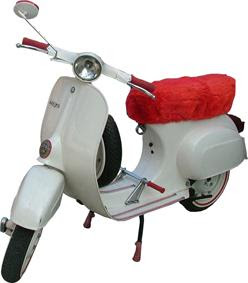
History Of VESPA

History

Post World War II Italy, in light of its agreement to cessation of war activities with The Allies, had its aircraft industry severely restricted in both capability and capacity.
Piaggio emerged from the conflict with its Pontedera fighter plane plant completely demolished by bombing. Italy's crippled economy and the disastrous state of the roads did not assist in the re-development of the automobile markets. Enrico Piaggio, the son of Piaggio's founder Rinaldo Piaggio, decided to leave the aeronautical field in order to address Italy's urgent need for a modern and affordable mode of transportation. The idea was to design a cheap vehicle for the masses.


คันเนี๊ยสวยๆ 55+

Renard

Un renard est un canidé du genre Vulpes, proche du loup. Mais, par similitude physique, le terme est aussi employé pour désigner des canidés appartenant à d'autres genres, comme Cerdocyon, Otocyon, Pseudalopex et Urocyon. L'appellation renard est donc non normalisée. Les points communs des différents genres de canidés usuellement rassemblés sous le nom renard sont :
un museau allongé,
des oreilles dressées,
une petite taille (60 à 75 cm pour le corps, et 35 à 50 cm pour la queue),
un poids d'environ 6 kg.
Les renards vivent généralement 2-3 ans, mais leur espérance de vie peut aller jusqu'à 10 ans et même plus, lorsqu'ils sont en captivité.

วันอังคารที่ 20 พฤศจิกายน พ.ศ. 2550

คำศัพท์ที่น่าสนใจ 1

- ne ........nulle part (adv.) = ไม่......ที่ใดเลย
- mentir (v.) = โกหก, พูดปด /

- mensonge (n.m.) = คำเท็จ, คำโกหก /
- menteur, menteuse (adj. et n.) = คนโกหก, ที่โกหก
- être capable (de) (adj.) = สามารถ # être incapable (de) = ไม่สามารถที่จะ

วันอาทิตย์ที่ 11 พฤศจิกายน พ.ศ. 2550

Miffy


Miffy is a picture book character in the form of a small female rabbit drawn by Dick Bruna. Her original Dutch name is Nijntje [nɛɪ̯ncǝ] which stems from a toddler's pronunciation of the word "konijntje" meaning "little rabbit".
Miffy was created in
1955, after Dick Bruna had been telling his one-year-old son Sierk stories about a little rabbit they had seen earlier in the dunes, while on holiday at Egmond aan Zee. Miffy became a girl after Bruna decided that he wanted to draw a dress and not trousers on his rabbit. Depending on the story, Miffy can be a baby or 4 years old.
At first Miffy looked like a toy animal, with floppy ears, but by 1963 she looked like the way we see Miffy today. Miffy is drawn in a very minimalist style, requiring only a few lines and one or two primary colors. There are some colors that are never used, and Bruna can be picky about a certain shade of color, brown and grey for example, and will search for it until he is happy. Even though the things that he draws are not realistic, they are instantly recognisible, and Miffy is obviously a rabbit.
There are now almost 30 titles for Miffy, and many more for the other characters. Dick Bruna has produced almost 100 books.
The Miffy books each contain sixteen pages of story. Each page has one illustration and four lines of verse, the last word of the second line rhymes with the last of the fourth. They are written about things that children can understand, and situations they will face such as going to the hospital and going to school, and they always have a happy ending. Some books have no text at all, such as Miffy's Dream
The books are printed in small format. Dick Bruna considers it important that his audience feels that his books are there for them, not for their parents. Most Miffy books have an advisory reading level of age 4 to 8 years.
Dick Bruna's books have now been translated into 40 different languages, and over 80 million copies have been sold all over the world. He has won many awards for his books, such as the Golden Brush in 1990 for Boris Bear and the Silver Brush for Miffy In The Tent in 1996. In 1997 he was awarded the Silver Slate for Dear Grandma Bunny, a book where Miffy's Grandmother dies.
The other characters that appear in the books are her family: Miffy's parents, her Grandma and Grandpa, Aunt Alice, and her Uncle Bob, who appears in Miffy Goes Flying. A new brother or sister for Miffy is introduced in Miffy And The New Baby. She also has many friends, Boris and Barbara Bear, who first appeared in 1989 and are boyfriend and girlfriend, Poppy Pig, who appeared in 1977, and her niece Grunty, Snuffy, who appeared in 1969, and other bunnies such as Aggie and Melanie.
Miffy was designed as a children's book character, but the design is now used on many other things like clothes, stationery, toys, glasses, household items etc.
Miffy has been appearing on TV since 2003, in a show named after her that airs on children's television channels such as
Treehouse in Canada and Noggin in the U.S..

Miffy statue at the Nijntjepleintje in Utrecht, the Netherlands.
Many think that Miffy is Japanese, because the line style is also used in
Hello Kitty and her friends. In addition, the Miffy brand is popular in Japan and there is a lot of Japanese-made Miffy merchandise. In Bruna's hometown, Utrecht, there is a square named after Nijntje, the Nijntjepleintje (lit: Nijntje Little Square, to retain the rhyme) and in 2006, the Centraal Museum opened a permanent exhibition, the "Dick Bruna Huis".
Miffy celebrated her fiftieth birthday in 2005. This has been celebrated in cities across the globe, for example in the
Manchester Art Gallery in England.
miffy น่ารัก เห็นแล้วมีค.สุข คิคิ

วันพฤหัสบดีที่ 8 พฤศจิกายน พ.ศ. 2550

Portugal

Le Portugal (officiellement la République portugaise) est un État de l'Union européenne se situant au sud-ouest de l'Europe, dans la zone occidentale de la Péninsule Ibérique, délimité au nord et à l'est par l'Espagne, et au sud et à l'ouest par l'océan Atlantique. Le territoire du Portugal comprend les régions autonomes des Açores et de Madère, situées dans l'hémisphère nord de l'océan Atlantique, ce qui en fait le pays le plus occidental de l'Europe[1].
Le nom du Portugal vient de son appellation originale au
IXe siècle, où le premier comté au nord était nommé Terra Portucalensis, c'est-à-dire la terre de Portus Cale, du nom de deux villes à l'embouchure du Douro, avec sur la rive droite Portus (l'actuelle Porto), et sur la rive gauche Cale (l'actuelle Vila Nova de Gaia).
Pendant le
XVe siècle et le XVIe siècle, le Portugal fut l'un des plus grands pouvoirs économiques, sociaux et culturels du monde, avec un vaste empire colonial en Afrique, Asie, et au Brésil. En 1974, la révolution des œillets met fin à l'empire colonial, en même temps qu'elle démocratise le pays. C'est aujourd'hui un pays développé, économiquement prospère, social et politiquement stable. Membre fondateur de l'OTAN en 1949, membre de l'ONU depuis 1955, de l'Union européenne depuis 1986, il est aussi l'un des pays fondateurs de la zone euro en 1999.
Bien que le pays soit de petite taille, à cause de la dictature instaurée en 1926 et qui a duré jusqu'en 1974-75 et la perte de ses colonies, le pays n'a connu son essor économique qu'après 1975, et c'est ainsi que près de 1,5 millions de Portugais ont dû aller travailler à l'étranger. Les fortes zones d'immigrations sont le Brésil, la France (près d'1 million), le Luxembourg (22% de la populaion totale du pays), la Suisse, les États-Unis, l'Argentine, le Venezuela, le Canada... (données: Service immigration)
[réf. nécessaire] Aujourd´hui le thème du déclin devient de plus en plus présent. Toutefois l´entrée dans l´UE a permis de redynamiser l´économie (aide aux PME, aux agriculteurs, nouvelles technologies), l´émigration s´est arrêtée et le pays tend à devenir un pays d´immmigration. En 1801, Madrid est parvenu à occuper le district d'Olivença situé au sud de Badajoz. Cette revendication territoriale n’est pas éteinte, les Portugais considèrent un peu ce territoire comme leur Gibraltar.